Azulens Blog
The AI Shift Is Not About Automation. It’s About Control.
AI is accelerating campaign analysis, creative production, and optimization, but the deeper shift is about control: who owns the logic behind decisions. This article argues that agencies and in-house teams need structured, independent intelligence to make judgment consistent, preserve strategy, and turn campaign experience into reusable learning.
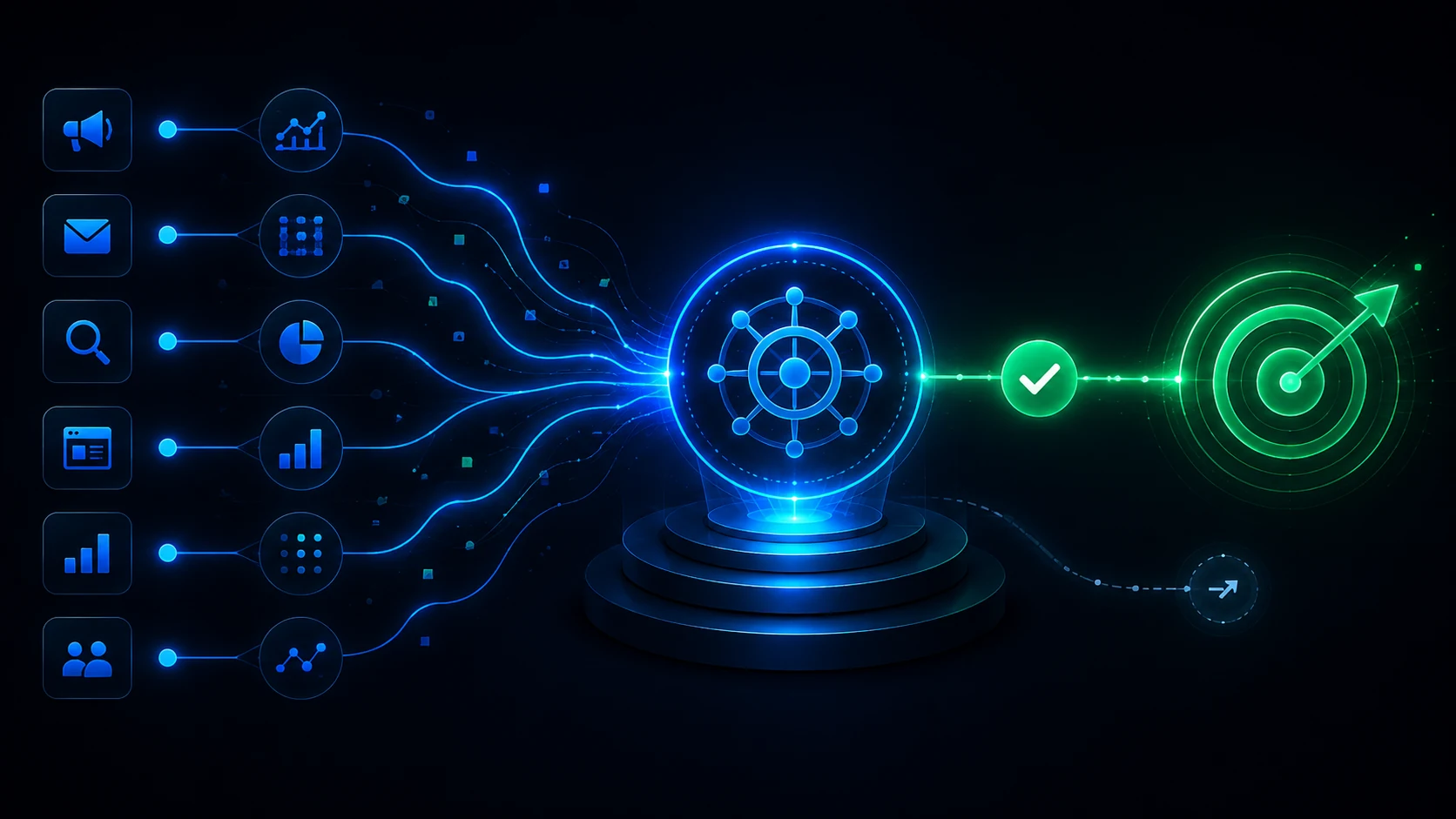
A lot of the current discussion around AI in agencies focuses on speed:
How much faster everything is getting.
Campaign analysis in minutes. Creative variations at scale. Automated optimization across platforms. But that’s not the real shift. The real shift is more uncomfortable.
It’s about who controls the logic behind decisions.
The value is moving but not in the way most teams think
In a recent piece by Laurent Oppenheim, referencing perspectives from Vinny Rinaldi and the Forbes Agency Council, one idea stands out:
Value is shifting from intelligence to judgment.
AI is rapidly taking over the intelligence layer:
- processing data
- generating outputs
- optimizing execution
But judgment - deciding what matters and what to do - remains human.
Most teams interpret this as: “Focus more on judgment.”
But that skips a critical step.
You can’t scale judgment without structured intelligence
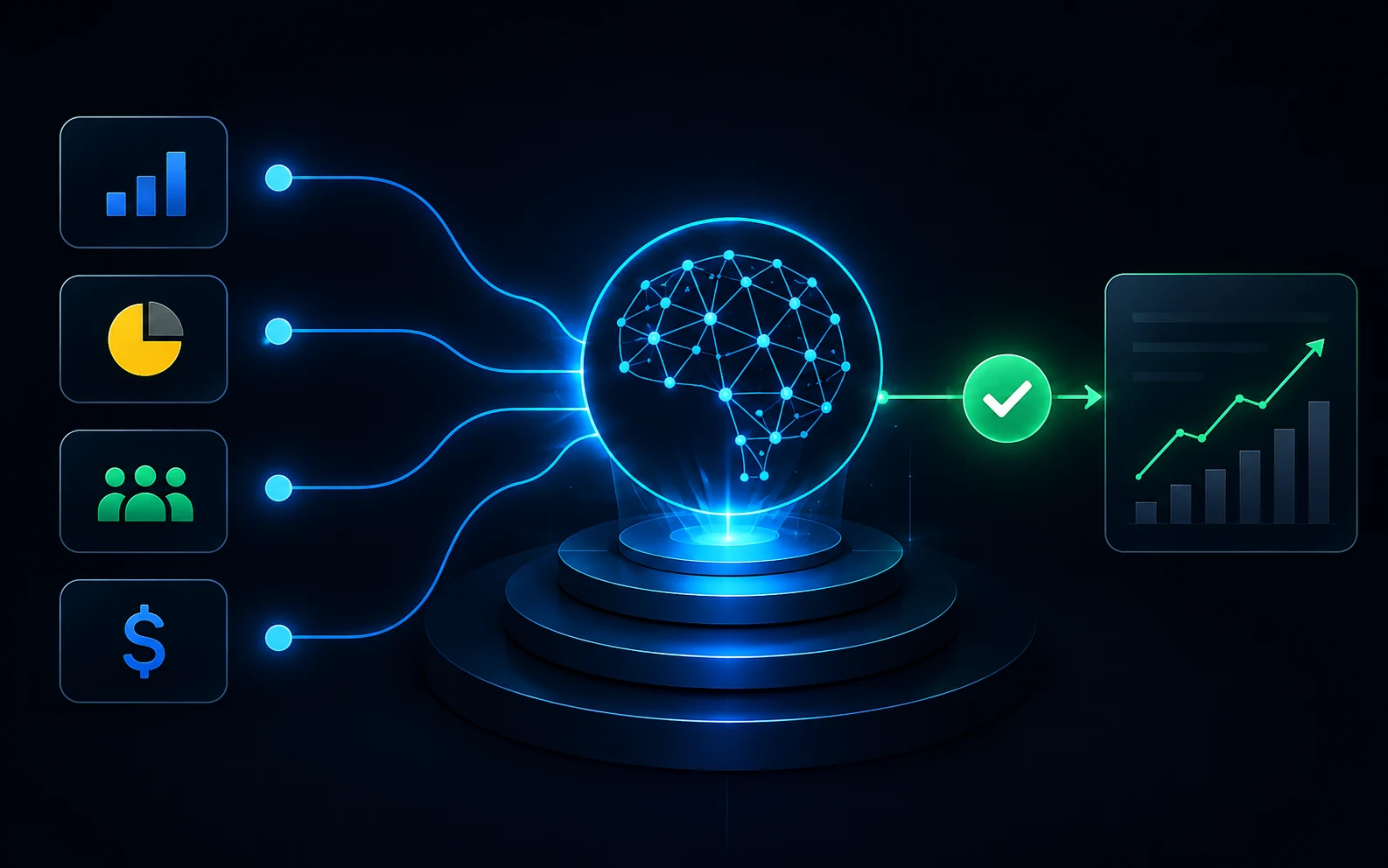
Judgment doesn’t exist in isolation.
It depends on:
- what you can see
- what you can compare
- what you can explain
And this is where most teams break.
Because their intelligence layer is:
- fragmented across platforms
- inconsistent across campaigns
- not structured into reusable logic
So even strong operators end up relying on:
- experience
- heuristics
- partial visibility
Most of the decision logic lives in people’s heads so every team member ends up solving the same problem differently.
This becomes a problem when you have to make decisions across systems you don’t fully understand.
The real risk: you lose control over your own strategy
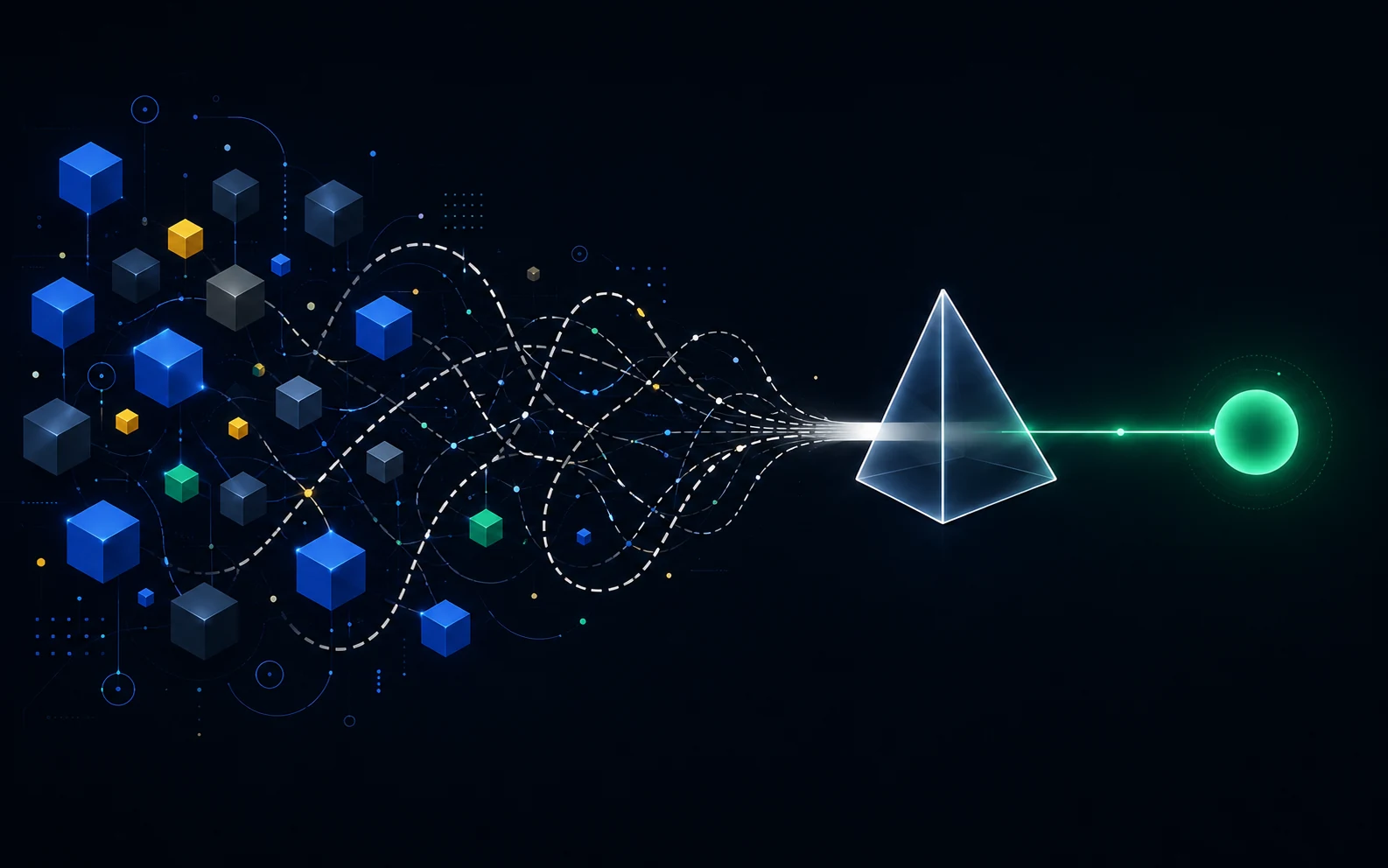
Vinny Rinaldi puts it very directly:
If you don’t own the data and logic behind your systems, you don’t control what they optimize for.
This is already happening.
AI agents are making decisions on:
- bidding
- placement
- audience prioritization
- budget allocation
At a speed no team can match.
But those decisions are not neutral.
They reflect:
- platform incentives
- embedded assumptions
- optimization logic you don’t fully see
Without an independent layer, you can measure results but you can’t evaluate whether your strategy is actually being followed.
This is where most teams operate today
Most agencies and in-house teams can:
- run campaigns
- scale budgets
- see performance
But they cannot clearly answer:
- Why did performance change?
- Was this aligned with our strategy?
- Should we repeat this or avoid it?
So decisions become inconsistent.
And over time, this leads to something more subtle:
Your strategy starts drifting without you noticing.
The missing piece is not more data. It’s structured learning.
Another key idea from Vinny Rinaldi and the broader discussion:
Agencies are sitting on massive amounts of experience but not encoding it into systems.
Which means:
- cross-client knowledge doesn’t compound
- patterns are not captured
- learnings disappear between campaigns
So even with more AI, more data, more automation
teams don’t actually get smarter over time.
Why we built Azulens
This is the exact gap Azulens is designed for.
Not execution. Not automation of campaigns.
But the layer that sits above it:
A strategy intelligence layer that turns campaign data into structured, independent learnings and recommendations.
Learnings are what make judgment reliable
If judgment is where value lives, then the question becomes:
What makes judgment consistent?
The answer is not instinct.
It’s structured learning:
- What actually caused an outcome
- Why it mattered
- What should be done differently next time
Azulens makes this visible automatically:
- across channels
- across campaigns
- across teams
So decisions are no longer isolated. They become comparable. Explainable. Reusable.
Independence is what keeps your strategy intact
There’s another critical piece.
If your only intelligence comes from platforms, then your interpretation of performance is also platform-driven.
Azulens provides an independent layer that:
- evaluates outcomes against your own strategy
- highlights when your logic is not being followed
- identifies when budget moves reduce effectiveness
So you don’t just see what happened.
You understand whether it was the right decision.
Making progress visible so teams actually improve
One of the biggest issues today: Teams don’t know if they are improving.
They see results. But they don’t see whether their approach is getting better.
Azulens changes that by:
- turning signals into learnings
- linking them to recommendations
- making them reusable over time
This allows even small and mid-sized teams to:
- build a consistent decision system
- reduce manual analysis
- scale without losing control
Final thought
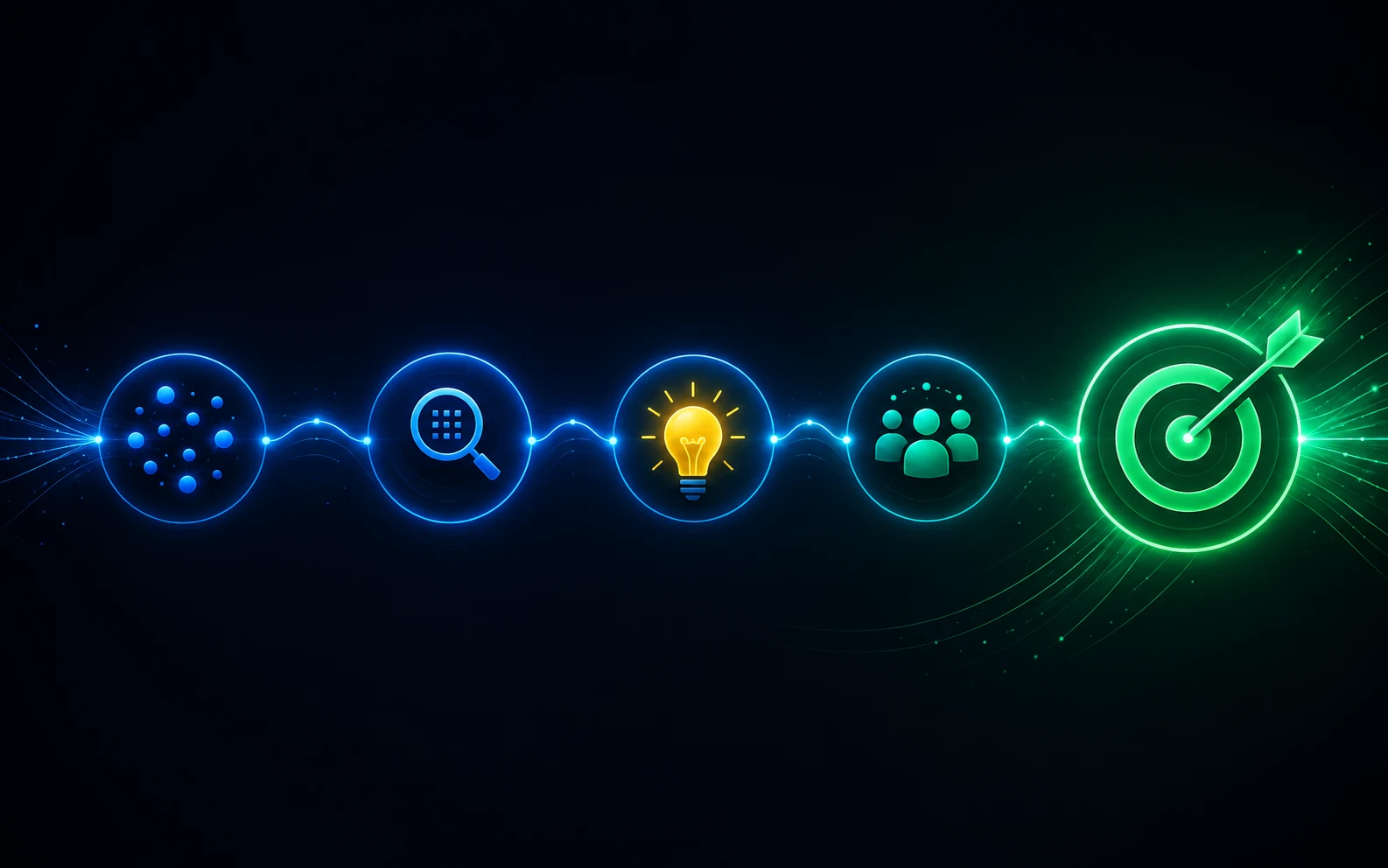
The shift is not:
“AI replaces humans.”
The shift is:
You need a system that allows humans to make better decisions.
Because without structured, independent intelligence:
- judgment becomes inconsistent
- strategy becomes invisible
- control slowly moves somewhere else
The teams that win won’t be the ones with the most automation.
They’ll be the ones that understand what their campaigns are actually doing and improve that over time.