Azulens Blog
Campaign analytics, made clearer.
Practical thinking on reliable reporting, data quality, and better marketing decisions.

The Deterministic–Agentic Spectrum in Campaign Analytics
AI systems are often framed as a choice between deterministic software and autonomous agents. In practice, real business workflows contain tasks across a spectrum. Drawing on roughly 12 years of Campaign Analytics experience, I designed Azulens around a simple principle: Agency should increase with ambiguity, while determinism should increase with the cost of being wrong. This article explains how that principle led to governed data, explicit business context and reusable Verified Analytics Skills - keeping analytical truth controlled while using AI for intent, pattern interpretation, prioritization and explanation.
Read article →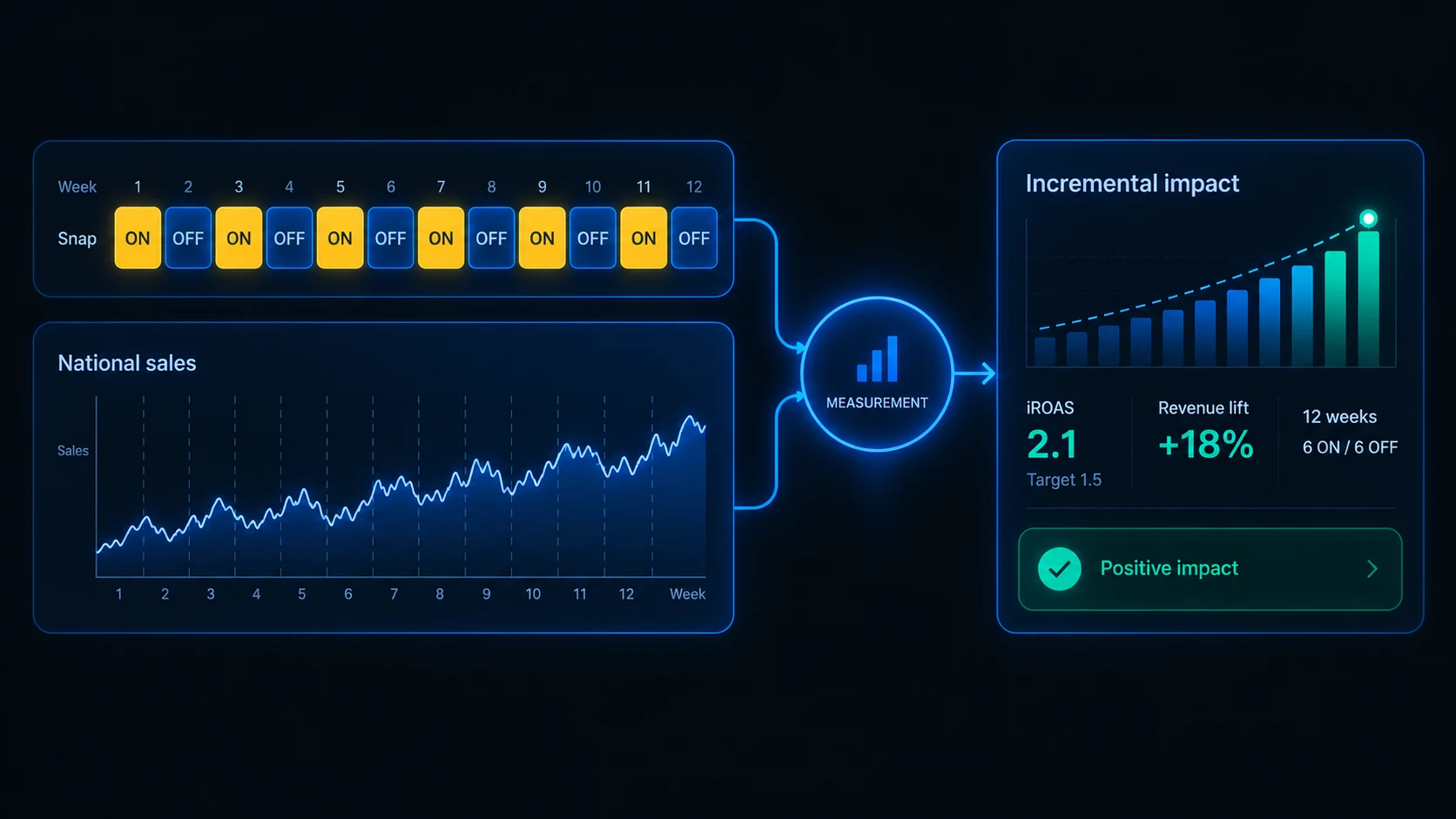
How to Test a New Ad Channel Without Geo Sales Data
What if you want to measure the incremental impact of a new advertising channel but only have one national sales number? A geo holdout is impossible, but a time-based switchback test may still work. This example follows a company testing Snapchat with a $50,000 budget over 12 weeks. We show how to translate an iROAS target into the sales lift the test needs to detect, use historical data to simulate whether the experiment is powerful enough, and interpret the final result without confusing statistical significance, power, and business performance.
Read article →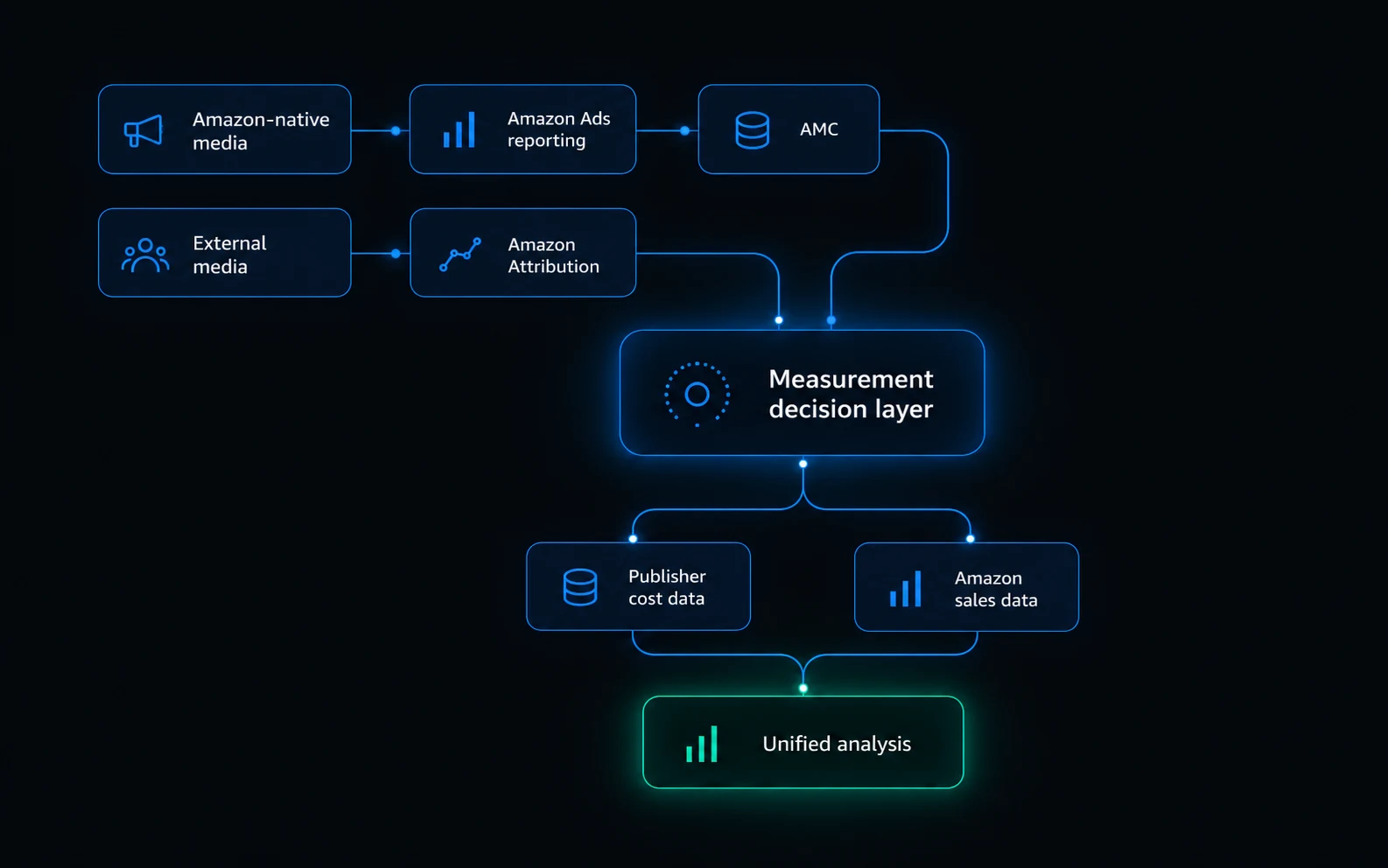
Amazon Attribution, Ads Reporting, or AMC? How to Choose the Right Measurement Setup
Amazon brands now have several measurement options: native Amazon Ads reporting, Amazon Attribution, Amazon Attribution API integrations, and Amazon Marketing Cloud. The difficult part is not getting access to data. It is choosing the right setup for where your media actually runs and understanding when data still needs to be stitched together. This guide explains the documented workflows, when manual, bulk, macro, and non-macro Attribution tags fit, where AMC belongs, and what brands need to know before building reporting or optimization processes around the data.
Read article →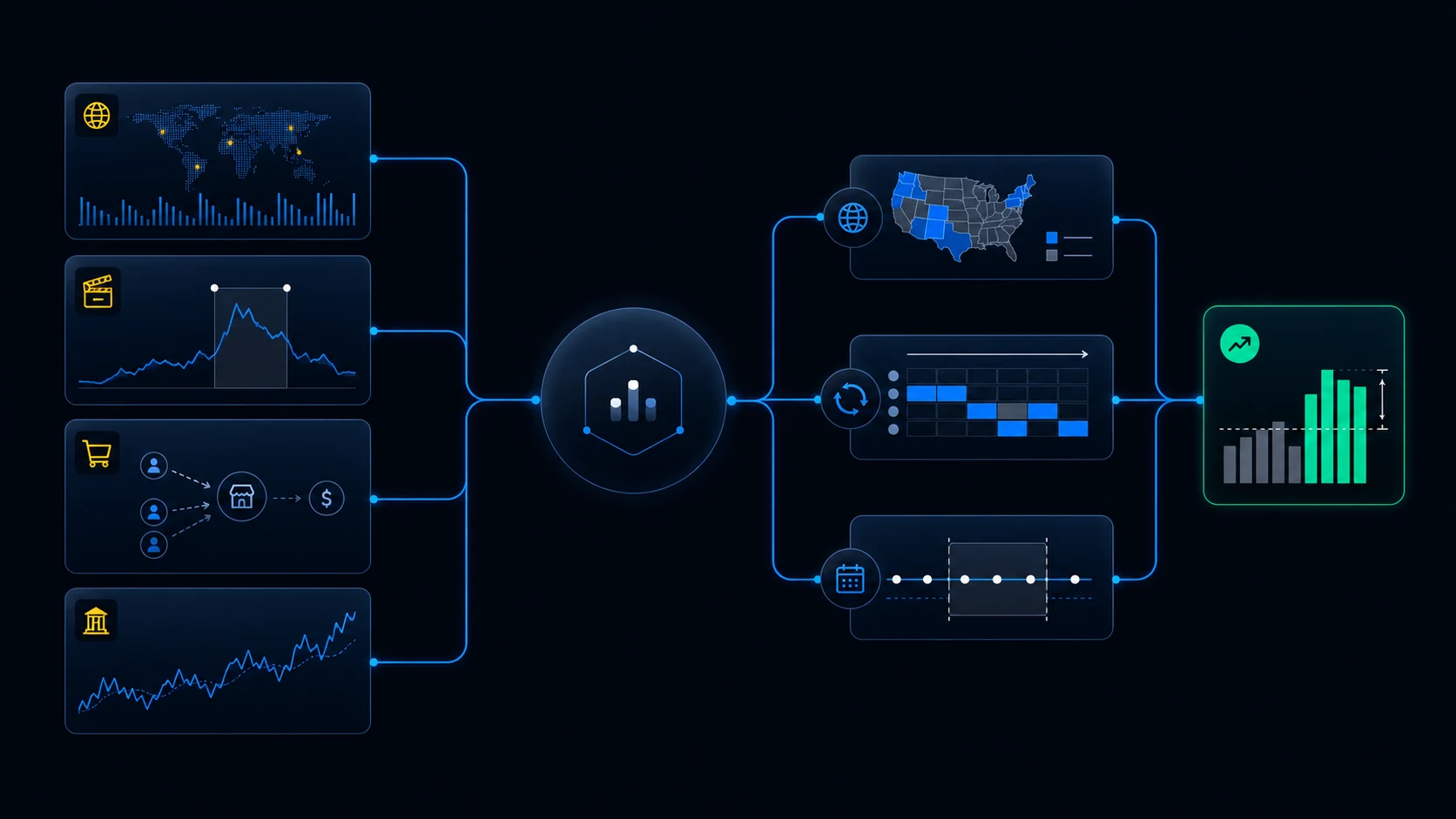
How We Approach Incrementality Testing at Azulens
Incrementality testing sounds straightforward until you try to apply it across very different businesses. Some advertisers have dozens of measurable markets and years of history. Others have only a few regions, short campaign windows, retailer sales, marketplace data, or no geographic conversion data at all. At Azulens, we start with the decision the advertiser needs to make, then determine what can actually be measured and manipulated. From there, we design the experiment around the client rather than forcing the client into one testing methodology.
Read article →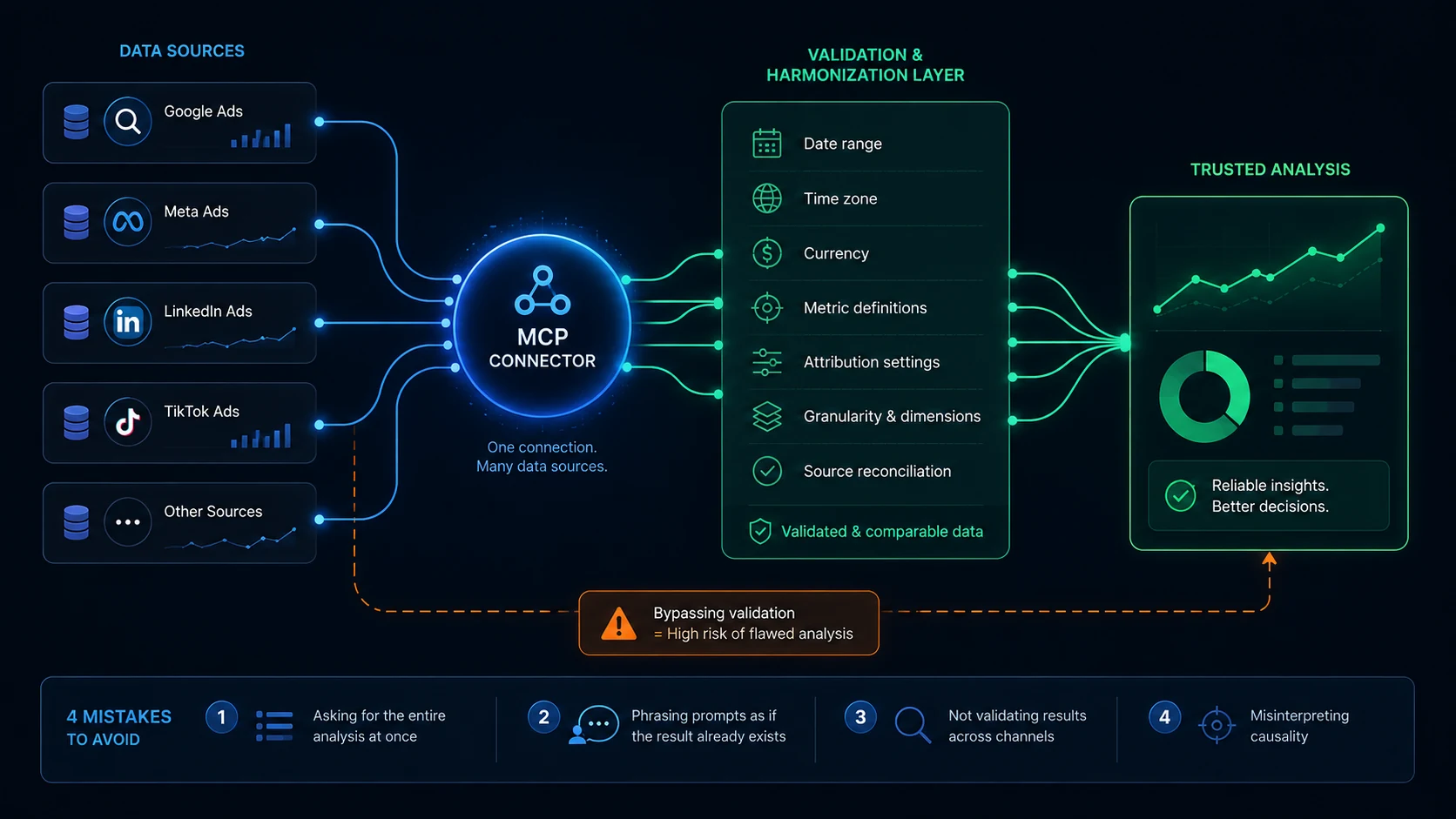
4 Mistakes When Using LLMs to Analyze Ad Data via MCP
MCP connectors can give LLMs direct access to live advertising data across dozens of platforms. But easier access does not automatically produce reliable analysis. The biggest risks appear when marketers ask for entire analyses in one prompt, lead the model toward a predetermined conclusion, fail to validate cross-channel calculations, or confuse attributed performance with causal impact. The solution is not better prompting alone. It is a controlled analytical process in which retrieval, normalization, validation, interpretation, and causal inference remain separate steps.
Read article →
The AI Shift Is Not About Automation. It’s About Control.
AI is accelerating campaign analysis, creative production, and optimization, but the deeper shift is about control: who owns the logic behind decisions. This article argues that agencies and in-house teams need structured, independent intelligence to make judgment consistent, preserve strategy, and turn campaign experience into reusable learning.
Read article →